Pole or de la Pole
Was Cardinal Reginald Pole, the last Catholic Archbishop of Canterbury, related to Edmund and Richard de la Pole, the dukes and earls of Suffolk who were the last princes of the House of York to actively seek the throne of England? The simple answer is yes - but not as closely as their names suggest.

Both Poles and de la Poles had Plantagenet blood in their veins. Cardinal Pole’s mother was Margaret, Countess of Salisbury, daughter of George, Duke of Clarence. Among Clarence’s brothers were Edward IV and Richard III and among his sisters was Elizabeth of York, who was the mother of Edmund and Richard de la Pole. Margaret, Edmund and Richard were therefore cousins...
Elizabeth’s children took their name from their father, John de la Pole, 2nd Duke of Suffolk; he married Elizabeth in 1458. Margaret’s children did the same but their father was Sir Richard Pole; he married Margaret in 1487. Despite the earnest claims of some medieval genealogies, it is highly unlikely that John de la Pole and Sir Richard Pole were directly related.
John de la Pole’s ancestors hailed from Humberside and they made a great deal of money trading in Yorkshire wool. They effectively bought their earldom (later dukedom) of Suffolk by lending vast sums of money to the crown and they probably added the “de la” prefix to their name to disguise their humble origins.
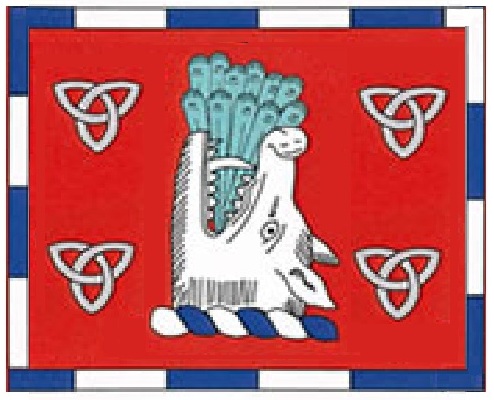
Sir Richard Pole’s ancestors, by contrast, were descended from a Welsh king and Prince of Powys named Gruffudd ap Gwenwynwyn who had sided with Edward I during the Anglo-Norman conquest of Wales. When Powys became a marcher-lordship, with Welshpool (originally called Y Trallwng, meaning marshy place) as its chief town, Sir Richard’s forebears adopted the surname “de la Pool”, meaning of the Pool, but they later dropped “de la” prefix and Pool became Pole.
Besides being related to Welsh royalty, Sir Richard Pole was a cousin of Henry VII through his mother, Edith St John. She was the half-sister of Lady Margaret Beaufort. Unsurprisingly, Sir Richard Pole was a diehard Tudor and marrying a daughter of the Yorkist Duke of Clarence was part of Henry VII’s policy of reconciling the white and red rose factions. Unfortunately for both families, their shared Plantagenet blood and Tudor paranoia sent several Poles and de la Poles to the Tower and the block.
• William de la Pole, Elizabeth’s sixth son was arrested by Henry VII in 1502. Though spared the axe, he spent 37 years in captivity and died whilst still a prisoner.
• Edmund de la Pole Elizabeth’s fourth son, was executed for treason by Henry VIII in 1513.
• Richard de la Pole Elizabeth’s seventh son fled abroad to escape his brothers’ fate. He was killed in 1525, leading an elite band of mercenaries at the Battle of Pavia.
• Cardinal Reginald Pole, Margaret’s third son, was forced into exile after Henry VIII’s split from Rome. He returned to England on the accession of Henry’s Catholic daughter, Mary I.
• Geoffrey Pole, Margaret’s fourth son, was arrested for treason in 1538. His evidence sent both his eldest brother and mother to the scaffold. Though Geoffrey was pardoned, he fled abroad after a failed attempt to commit suicide.• Henry Pole, Margaret’s eldest son, was executed for treason in 1539.
• Margaret Pole was executed in 1541 simply for being a Plantagenet. She was 67 years old and her botched execution is one of the most egregious examples of Henry VIII’s tyranny.
Anyone interested in the history of the de la Pole brothers should take a look at The Last Yorkists, currently available from Amberley Publishing and all good online or high street bookshops:

TWO ROYAL MYSTERIES - ONE FASCINATING FAMILY
August 2nd 2026, is the 926th anniversary of the death of King William II, the son of and successor to William the Conqueror...
The younger William, who was nicknamed Rufus on account of his red beard and ruddy complexion, was killed by an arrow whilst hunting in the New Forest yet few mourned his death. "In these days all justice was in abeyance and all injustice arose … and [he was] odious to God," wrote the anonymous compiler of the Anglo-Saxon Chronicle.
For centuries, historians have debated whether or not William II's killing was accidental or part of a wider conspiracy to replace the degenerate Rufus with his brother, Henry I. But what connects the suspicious shooting of England's second Norman king with the Wars of the Roses, Richard III and the equally mysterious fate of the Princes in the Tower? The answer is the Tyrell family.
The man accused of shooting the wayward arrow that killed Rufus was Sir Walter Tyrell (also spelt Tirel or Tyrrell) and the man who allegedly recruited the assassins who murdered the Princes in the Tower was his descendant, Sir James Tyrell. Though Sir Walter always protested his innocence and the evidence against Sir James is scant to say the least, it is a remarkable coincidence that one family supposedly produced two of the most famous regicides in English medieval history.
For anyone interested in exploring this connection further my forthcoming book "The Boar and the Peacock" traces the Tyrell family saga from Sir Walter's arrival in England with William the Conqueror to Sir James' fateful involvement with Richard III and Henry VII. The Bar and the Peacock is currently avasilable to pre-order from the publishers, Amberley Publishing and all good online or high street bookshops:
https://www.amberley-books.com/the-boar-and-the-peacock.html